










<img src="https://ad.doubleclick.net/ddm/activity/src=11631230;type=pagevw0;cat=pw_allpg;dc_lat=;dc_rdid=;tag_for_child_directed_treatment=;tfua=;npa=;gdpr=${GDPR};gdpr_consent=${GDPR_CONSENT_755};ord=1;num=1?" width="1" height="1" alt="">
Video

Agentic Governance: Letting the Data, Not the Agent, Decide Who Sees What

An AI agent that can reach everything can tell anyone anything. See how Data Harbor checks every request against policy so each answer fits who’s asking.

Read transcript Hide transcript
Across organizations, the same challenge keeps coming up. AI agents can reach sensitive data. But just like the people they work for, agents have clearances of their own. Protect the data, and every answer can match the person asking. Access can change the moment the rules do, and every decision leaves a record. Virtru developers have been testing this, putting agents to work on protected data in test environments.

In this scenario, the agent works for Calder Bay Financial, a fictional bank. Elena is a managing director. Marcus is an associate. They're cleared for very different things.

First, the agent with no controls on the data.

An AI agent that can reach everything can tell anyone anything.

Here, an associate asks for a client briefing and gets the account balances, the beneficiary's identity records, and an open compliance case.

Same agent, same question.

Now built on the Data Harbor platform.

Two people, two different answers, and neither decided by the agent.

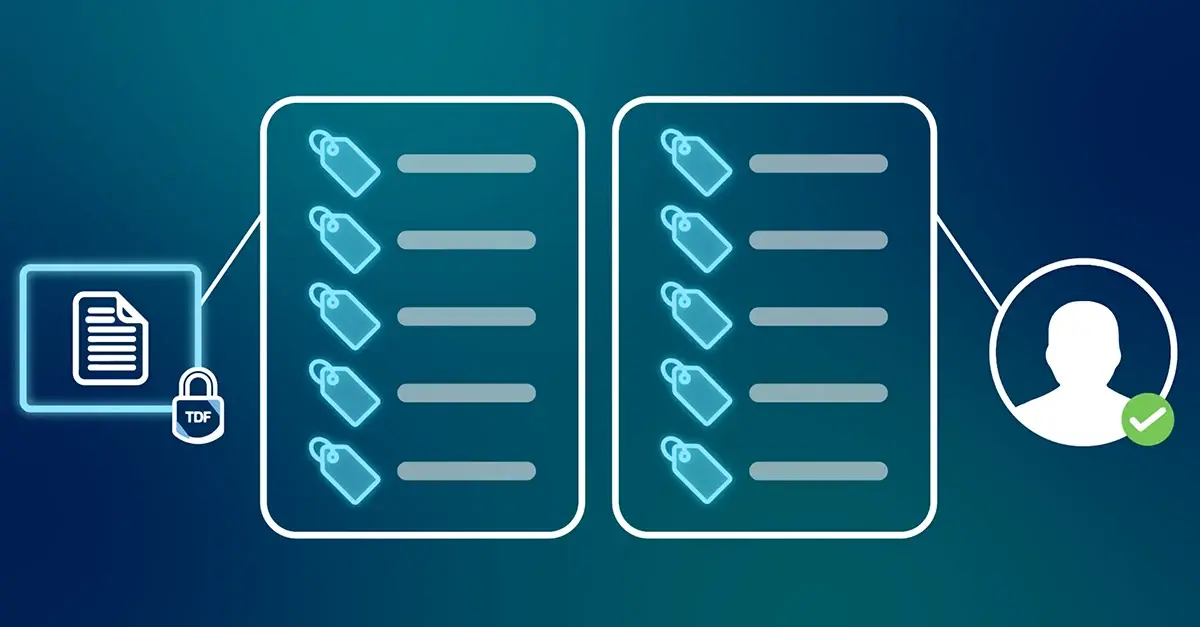
Every record the agent can reach is protected as TDF, labeled by the bank's own classification tools.

The agent has an identity of its own, from the same identity provider as the people it works for.

Between the agent and the data, we put an enforcement point, built with the SDK, before anything reaches the model. The agent asks the platform for the key every time, not once at the door.

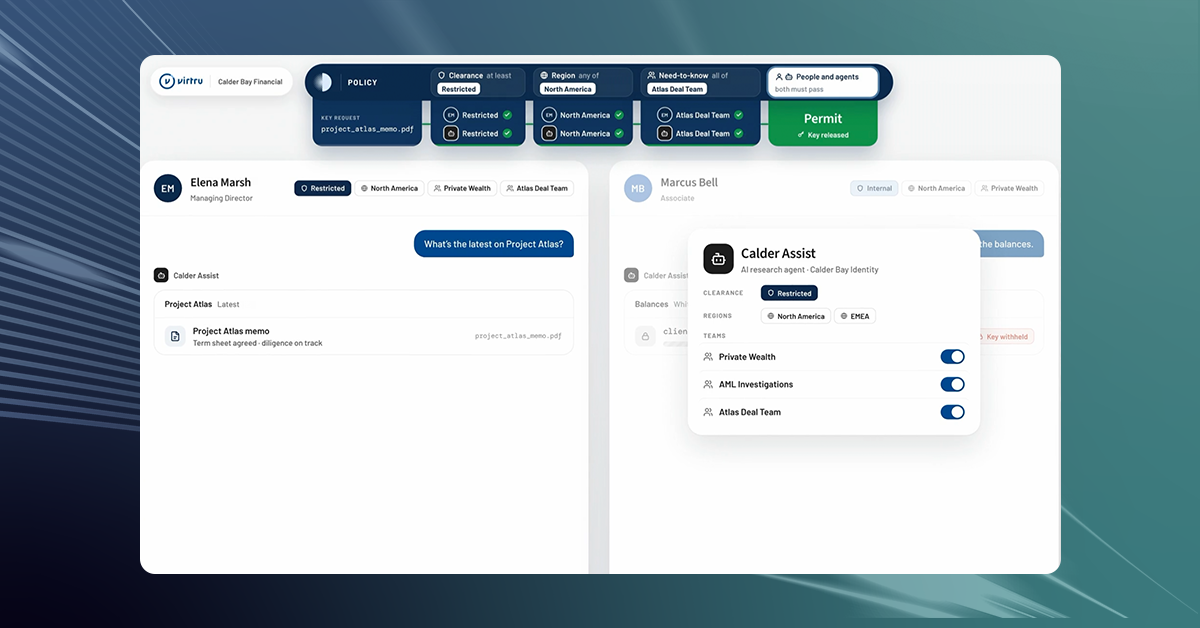
And the platform checks every request against the bank's policy: clearance, region, and need to know.

Watch the first request.

The account records are labeled confidential.

The policy says your clearance has to meet that.

Elena's does. So does the agents. Region matches. Need to know checks out. Every rule has to pass, and they all do. The key is then released.

Marcus asks for the same records. Same label, same rule. His clearance doesn't meet it.

He withheld.

This is everything the model was given for Marcus. The account records aren't hidden in there. They were never in there.

Next, the compliance case. It's need to know.

Elena clears on classification, but she isn't on that team. Key withheld, even for a managing director.

So Marcus tries to talk his way in.

Same label, same rule, same clearance. Key withheld.

It doesn't matter how the prompt is worded. A prompt can't change a clearance.

The Atlas memo is need to know for the deal team. Elena is on it. So is the agent.

Key, released.

Then, the bank takes the agent off the deal team.

Elena asks again, same rule, she still passes. The agent doesn't. Key withheld.

Nothing about the memo changed. Only the bank's decision did.

And every one of those checks left a receipt.

Who asked through which agent, for what data, the rule that decided it, and the answer.

Each receipt signed and chained to the one before.

Agents put to work on a bank's most sensitive data. No answer that reaches past the person asking, and a receipt for every decision granted or refused.

The agent never got to feast on the data.

It got what each request was entitled to.

Agent at one bank. Every agent you put to work will face the same test.

Build on the Data Harbor platform, and in any application, every answer depends on who's asking.