






<img src="https://ad.doubleclick.net/ddm/activity/src=11631230;type=pagevw0;cat=pw_allpg;dc_lat=;dc_rdid=;tag_for_child_directed_treatment=;tfua=;npa=;gdpr=${GDPR};gdpr_consent=${GDPR_CONSENT_755};ord=1;num=1?" width="1" height="1" alt="">
Video

Accelerating AI for Good with Dapple | Virtru Data Harbor
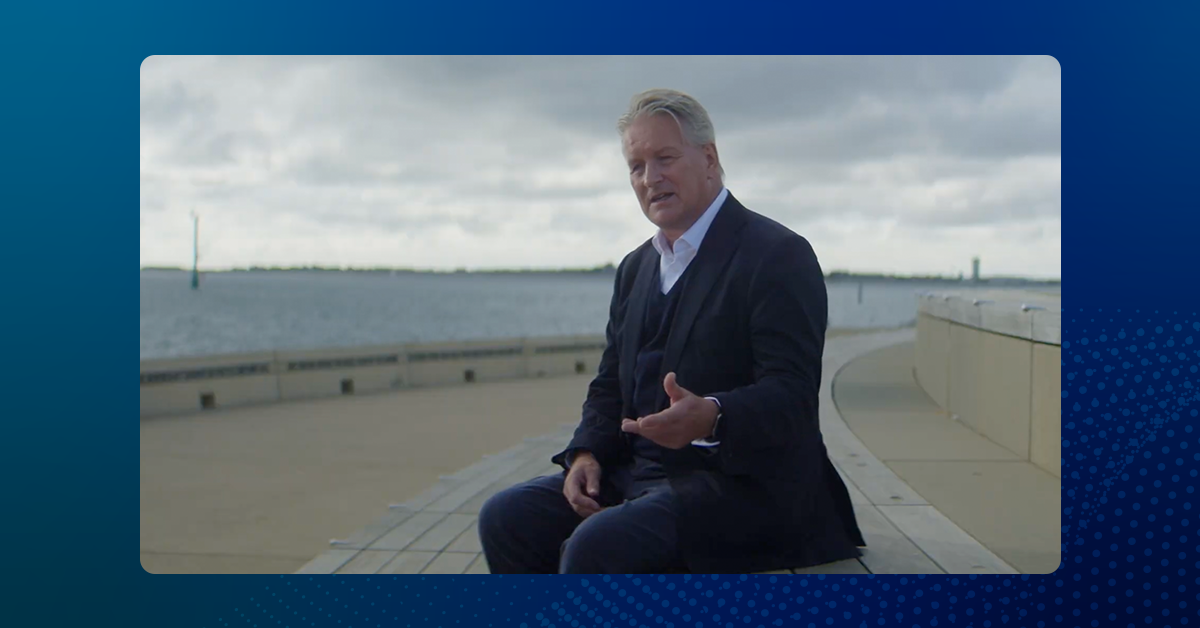
Dapple CEO Gadalia O'Bryan explains how biometric, cryptographic identity and the Virtru Data Harbor Platform keep humans in control of AI agents and data.

Read transcript Hide transcript
Gadalia O'Bryan: In terms of the origin story of Dapple, I have been in cybersecurity for over twenty years now. One of the things that really bothered me is that I have this human identity when I'm walking around the world. My friends know who I am. I know who I am.

But when you go online, suddenly that identity becomes something that's easy for folks to steal. It becomes something you can forget. If I forget my password, suddenly I can't get access to my bank account. That seemed frustrating to me, but it's also a really big cause of security breaches.

My background in math, and my history with the NSA and cryptography: that's how Dapple was born. It was literally in the middle of the night. I woke up, there was a thunderstorm, and I was like, "I have this idea."

What we do is take a biometric, so think face or fingerprint. We use that to create an online identity, and it's cryptographic based. So you're not having to store a lot of personal data, or really any sensitive data, and it's something you can carry with you. You can think of it as: my face is my key.

You're basically using cryptography to get this real, durable proof of humanhood online. The user experience feels very much like Face ID. The difference is, with Face ID, if you lose your phone and you get a new iPhone, it has no idea who you are.

So this is more portable. You get a new phone, you get a new computer, you can use it across those devices.

Will Ackerly, the cofounder of Virtru, and I were interns at the NSA more than twenty years ago. At that time, we were actually working on stuff that is so relevant to what we do today.

I was working on Dapple and realized that we have this great way to have a cryptographic identity that's bound to a human. You can use that to sign data, encrypt data, or delegate access to, say, an AI agent. But that's where we stop. I knew I needed a capability that could take that and actually apply it to the data. As AI workflows and AI agents themselves become more powerful, they really will try to work around controls when they can.

Dapple provides that root of trust in the human. We integrate with Virtru to apply that to data and use it at critical decision points in an AI workflow. You can imagine an insurance analyst reviewing a life insurance claim, sitting down and saying, "Okay, I want AI to assist me in this workflow." But there's a lot of PII it could have access to. I'm not just going to give it raw access to all of that at once.

You also need to make sure that the AIs can't just automate the human out of it, give themselves their own approval, and assign themselves their own access. Once we're able to delegate, say, "You're able to access this particular bit of data for this amount of time," that's when we hand it off to the Data Harbor Platform to apply that to the data and to the workflows. Each time the human does that, you're detecting that the live face is present, and you're using the key that's produced to sign an immutable audit trail.

Say you have a mission partner environment, where different combinations of countries need to come together and share data. If you try to protect that at the perimeter, you have to give up ownership or sovereignty over that data. Which nation is going to be responsible for that perimeter? Whereas if you attach those controls to the data itself, not only do you not have to give up sovereignty of that data, but you have a lot more flexibility. I see data sovereignty and identity sovereignty coming together in a really cool way.

There's also this idea of responsibility. It's a big question, a philosophical question that a lot of folks are asking: if an agent does something, who is ultimately responsible for it? Knowing that there is a true human identity behind those actions remains very important.

Security can often be a defensive sale, and that's a little bit hard when folks can put their head in the sand and ignore the problem. But I think the opportunity folks see in leveraging AI is forcing even the business decision makers to realize this is something they have to take seriously.

The Data Harbor Platform, to me, is the only solution out there that brings granular security control, flexible security control, and revocable security control that is all very usable. It's easy for a partner to integrate with, easy for a customer to integrate their use cases with, and it's not easy to pull that off.