








<img src="https://ad.doubleclick.net/ddm/activity/src=11631230;type=pagevw0;cat=pw_allpg;dc_lat=;dc_rdid=;tag_for_child_directed_treatment=;tfua=;npa=;gdpr=${GDPR};gdpr_consent=${GDPR_CONSENT_755};ord=1;num=1?" width="1" height="1" alt="">
Video

Secure Collaboration Tools with Rocket.Chat and Pexip | Virtru Data Harbor
Jordan Owen and Chris Skelly explain how ABAC and Virtru Data Harbor secure real-time communications, from Rocket.Chat to a UK classified call at sea.

Read transcript Hide transcript

Jordan Owen: We work inside of the secure, classified, forward-deployed communication space. Our value is real-time communications, whether it's audio, video, or content sharing.

Chris Skelly: We work in highly secure spaces. As we've been working with our customers to meet their zero trust requirements, ABAC, attribute-based access control, has become a big part of what we do.

Working with Virtru and the Data Harbor platform, we've built into our ABAC solution the ability to use an external policy decision point like Virtru.

Jordan Owen: For us, the integration with Virtru works exactly the same way it does for you.

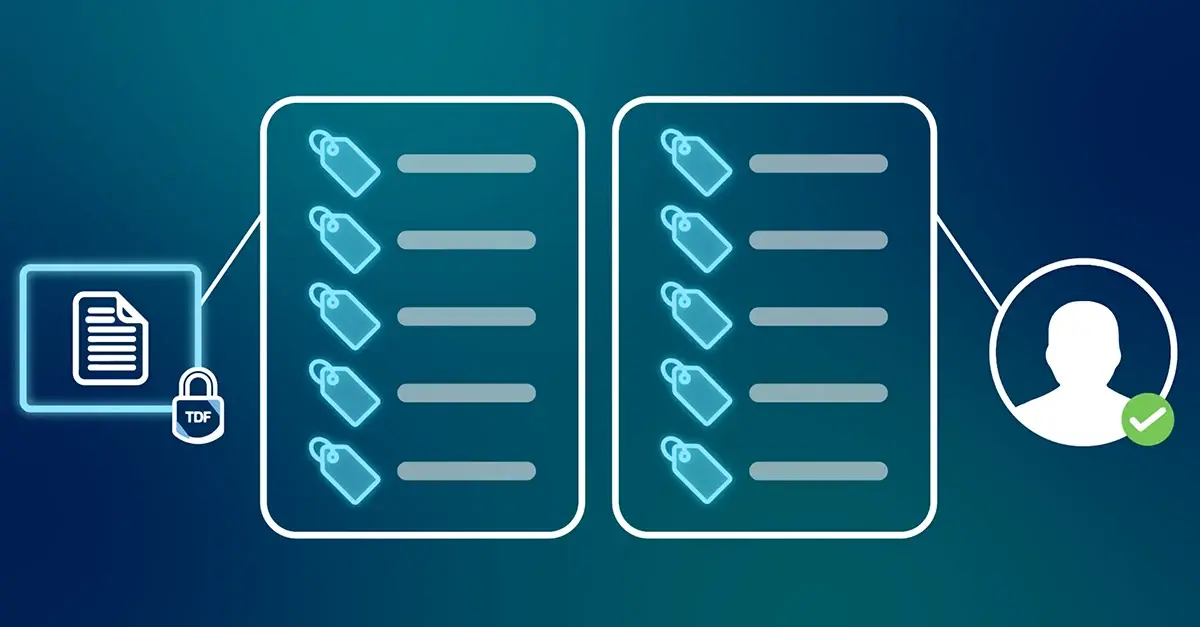
Chris Skelly: We have a policy decision point where we can validate a user.

As a platform, we don't have to be aware of all of the attribute values ourselves. Instead of having to ingest all of that information, we simply make a call out to Virtru.

Jordan Owen: We don't want to be the source of that truth. There's no value in continuing to duplicate and distribute that information, where it has to be maintained, updated, and kept current.

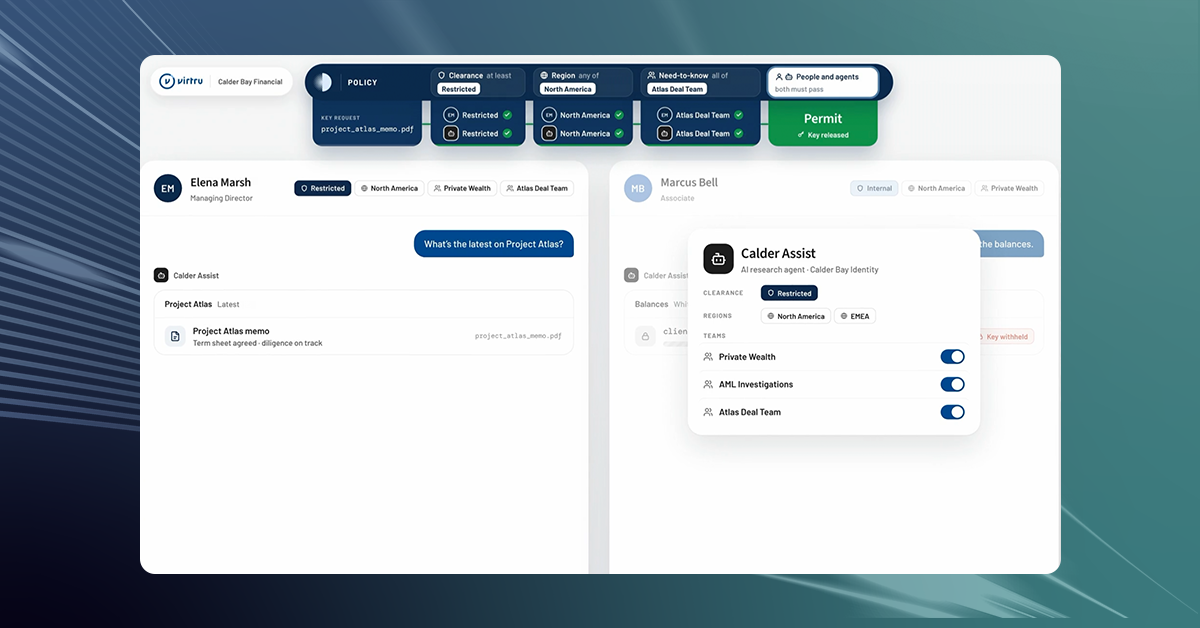
Chris Skelly: For a given room in Rocket.Chat, if a particular user is trying to access that room, we're continuously evaluating whether that user's identity information has the attributes that match the requirements of the object they're trying to access.

Jordan Owen: Imagine, if you will, that I'm a conference host and I need to schedule a meeting. I choose the participants. We then send a request to the Virtru back end to validate all of the participants in the meeting. Virtru confirms back to us: yes, we're good to go. We're then allowed to schedule the meeting.

We don't stop there. When the users go to join the meeting, we revalidate them. If anything has changed for a user, we won't let them into the conference. That makes sure the information is protected.

Chris Skelly: We see this happening every day. Something has changed in terms of what's being covered on a conference call, and certain people are automatically removed.

These days, perimeter security is not enough. Internal spills are a huge problem. If I'm a mission operator working with a joint allied force, I don't know everything about you at that moment in time. Virtru solves that problem. The mission operator can act at pace, with confidence, knowing their decisions are being validated and they're not creating an internal spill.

Jordan Owen: SIPRNet is the classified, DoD-level communication network built across all DoD agencies to allow classified communications to flow. It is a completely air-gapped network.

We need to build up and tear down missions more quickly than we ever have, and build up collaboration between nations, departments, and teams across all classification layers. Doing it that way is unsustainable. Instead, we can build one network that exists at the baseline classification we need.

We can assign and attach a classification level to the data that exists inside that network itself. All of it is continuously verified and continuously validated. If anything changes, we can make sure the data itself is protected, and the user can work within that data as well.

Operation Highmast was a really cool use case. It was a research project, if you will. Can the UK take a ship, deploy it out to sea, run a NATO classified network, and then communicate using UK classified material, not NATO-exposed, on top of that NATO classified network? It used the three of us seamlessly.

They made their first-ever successful UK classified video call, escalated from a Rocket.Chat conversation, fully authenticated and authorized using attribute-based access control on top of the Virtru platform. We were able to do it while they were deployed at sea in the Pacific Ocean.

Chris Skelly: Think about a bank. If the wrong two people are talking to each other, you've violated separation of duties across the organization and created the possibility of insider trading issues. Those same challenges exist across industry.

The API itself is very well documented. Virtru is closely coupled with, and compliant with, OpenTDF, which enables our team to work to a standard. We've built a lot with Virtru, but we haven't had to do a lot of work. The API layer has been fantastic, very straightforward.

We've been able to deliver what feels like a very complex solution without a lot of complexity. For our team, that's magical.

Jordan Owen: We built a prototype of this secure scheduling engine over a weekend. We were then able to demonstrate it to the customer and show them the capability we could unlock.

Chris Skelly: That opens up a lot of possibilities for forward-deployed forces at the tactical edge. You can roll over from LAN to WAN to SATCOM to high-frequency radio, and it lets us introduce entirely new solutions to the tactical edge.

Jordan Owen: Decisions at the speed of war.